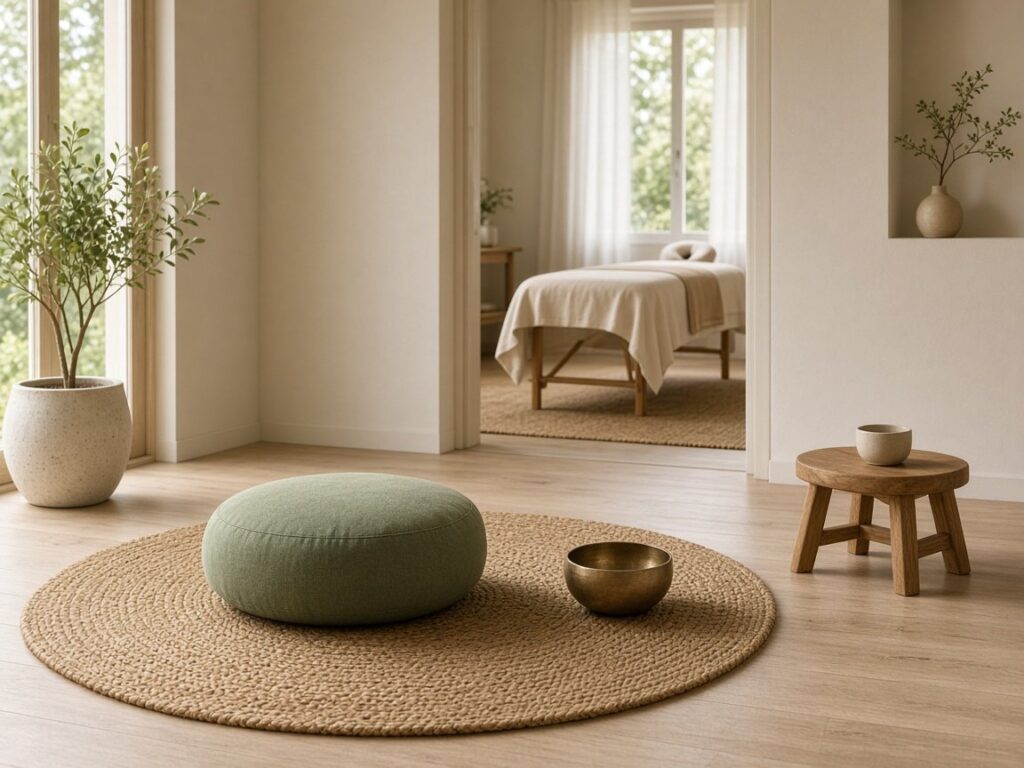
Guided Meditation vs Wellness Massage in London: Which Should You Choose?
There is a particular kind of indecision that arrives at the end of a crowded London day. You have an evening to yourself and want to use it well. A guided meditation class sounds appealing, but so does a quiet massage appointment. Both invite you to stop doing quite so much. Beyond that, they ask very different things of you.
Guided meditation is usually an attention-based practice led by a person’s voice or a recording. Wellness massage is a practitioner-led experience involving agreed physical contact. Meditation may ask you to notice breathing, sounds or thoughts; massage centres on the physical experience of a treatment. Either can be part of an ordinary relaxation routine, but neither is automatically the better choice.
Before you select an appointment, think about whether you want guidance for your attention, hands-on bodywork, or simply a space in which you can rest without having to perform. Your answer matters more than which option happens to be fashionable.
What happens during guided meditation?
In a guided session, an instructor or recording offers prompts for where to place your attention. You may be invited to notice your breathing, observe sounds, feel the contact of your feet with the floor or picture a familiar place. The guidance gives the practice structure; you are not expected to eliminate thoughts.
A class might take place seated in a chair, on a cushion or occasionally lying down. An online recording may be only a few minutes long, while a facilitated group meeting can include an introduction, practice and discussion. These details depend on the organiser. Meditation does not require a particular religious belief, expensive equipment or an impressive ability to sit still.
The NHS beginner’s meditation guide recommends finding a comfortable place and explains that a wandering mind is a normal part of practice. You can open your eyes or choose a different position when appropriate. The point is not to pass a test in concentration.
What happens during a wellness massage?
A wellness massage normally starts with a conversation about the proposed treatment, health considerations, pressure preferences and boundaries. The practitioner then provides hands-on bodywork using techniques appropriate to the booked service. The setting, duration, products and positions differ between providers.
The client is not required to meditate, follow imagery or achieve any particular emotional state. They may notice warmth, pressure and the pace of movement, or simply allow their attention to wander. Someone might prefer quiet throughout, while another person welcomes occasional explanations. Both should be able to communicate discomfort and ask the practitioner to pause.
Massage is not one standardised experience. A brief relaxation appointment and a longer specialist service can feel quite different. Velvete’s guide to what to expect in a professional session provides background on the sort of practical questions clients may want to raise. Confirm the current treatment description with the studio rather than inferring details from a general article.
A simple comparison before you book
| Consideration | Guided meditation | Wellness massage |
|---|---|---|
| Main activity | Following attention prompts | Receiving agreed practitioner-led bodywork |
| Physical contact | Usually none | Typically central to the session |
| Participation | You follow or adapt the guidance | You communicate preferences and respond to comfort checks |
| Location | Home, online, group class or private session | Usually a treatment room, studio or suitably arranged visit |
| Equipment | Often a chair or comfortable space | Usually a suitable treatment surface and professional supplies |
| Typical budget | Free recordings exist; classes and private instruction vary | Professional appointments have a fee that varies by provider |
| Key question | Do I enjoy guided attention exercises? | Am I comfortable with touch and the proposed treatment? |
This comparison is about the formats, not a ranking of health outcomes. A recorded meditation can be tried at home at little or no cost; an in-person massage involves the practical arrangements of a professional appointment.
The distinction between being guided and being touched
The clearest decision point is physical contact. Guided meditation generally allows you to keep personal space. You can remain seated and stop an exercise without another person entering that space. For someone who does not want touch, this may make meditation a more comfortable starting point.
Massage depends on consent to the particular treatment. Professional care includes explaining the format, appropriate draping, relevant products and how the client can request changes. You should never be expected to accept pressure, positioning or contact simply because you have booked the appointment.
Some clients enjoy the simplicity of having a practitioner lead the practical sequence. Others prefer activities they can control independently. The choice is personal and may change from one week to the next.
Does massage require you to switch off your mind?
Not at all. You do not have to become silent, sleepy or detached from your surroundings to receive an appropriate wellness treatment. You can listen to the room, ask questions and remain aware of how you feel. In fact, being able to identify and communicate discomfort is important.
A massage appointment should not be marketed as a guaranteed way to silence anxious thoughts. The US National Center for Complementary and Integrative Health reviews evidence on massage for several conditions and warns against postponing medical care for a health problem. Enjoyment and a welcome opportunity to rest are reasonable goals; treatment of a diagnosed condition requires separate consideration.
How much time should you allow?
Guided meditation can fit into a five-minute interval at home, but a class may take much longer once travel and introductions are counted. The NHS provides short guided exercises for beginners, making it possible to explore the format without committing to an evening out.
A massage booking involves a different timetable: arrival, consultation, the treatment itself and time to leave. Providers do not always calculate appointment duration in the same way. Ask whether the advertised time includes consultation and changing, and how long the hands-on portion is expected to last.
If you are travelling across London after work, the simplest option may be the one that fits naturally around your other commitments. A session that creates a rushed journey may be less appealing than a shorter, more convenient alternative.
Can the two experiences be combined?
They can be complementary in an ordinary routine without becoming one treatment. Someone might listen to a brief guided recording at home before leaving for an appointment. Another might prefer a few quiet minutes afterwards, without a recording at all.
Some wellness providers describe treatments that include breathing prompts, mindfulness or a short period of stillness. These descriptions do not necessarily mean the practitioner is delivering a formal guided-meditation lesson. If a combined format interests you, ask what is actually included and who leads each part.
Velvete discusses mindfulness within its wider wellness approach, but its public contact information does not establish a separately bookable guided-meditation class. That distinction is worth checking rather than assuming the two activities can be purchased together.
Three London evenings, three sensible choices
Imagine a visitor staying near South Kensington who wants a low-cost pause between sightseeing and dinner. A brief guided recording in their hotel room may suit the available time. They can stop whenever they wish and do not need to coordinate an appointment.
Now picture a professional finishing a demanding day near Earl’s Court. They enjoy professional bodywork, have no relevant reason to avoid massage and would rather not follow spoken instructions. After confirming the treatment details, they may choose a studio appointment instead.
A third person is curious about both, but notices that sitting quietly brings up uncomfortable feelings. They might try a gentle walking mindfulness exercise rather than a long seated meditation. They might also choose a massage on a different day if hands-on treatment appeals and is appropriate for them.
These are illustrative decisions, not client accounts. Each involves choosing the format rather than chasing a guaranteed result.
Comfort, access and privacy are part of the decision
Meditation classes vary in accessibility. Some provide chairs, captioned recordings or written instructions, while others expect floor seating. If a particular position, sound level or teaching style matters to you, ask the organiser before attending. An online format may offer flexibility, although it may not suit everyone.
Massage brings additional questions about access to the studio, treatment-table positioning, products, practitioner communication and consent. A client should be able to explain relevant comfort needs without disclosing unrelated private information. The provider should be transparent about which adjustments are possible and any limitations.
Both settings also involve privacy choices. A group session may include shared discussion; a one-to-one appointment may require personal booking details. Ask how information is handled and whether participation in discussion is optional. A calming atmosphere should not depend on giving up control over personal boundaries.
What does the evidence actually say?
Research on meditation and mindfulness suggests possible benefits for some people, but results differ by programme, population and outcome. The NCCIH meditation evidence review also notes that negative experiences, including increased anxiety, have been reported. Mindfulness should not be presented as risk-free or as a replacement for established care.
Massage has been studied in a range of contexts, but evidence quality and effects vary considerably. It is not scientifically sound to say that wellness massage is always better than meditation for stress, or that either produces a particular change in the nervous system after one appointment.
If you are experiencing ongoing distress or symptoms that concern you, consult an appropriate healthcare professional. A wellness activity may be a personal choice alongside recommended care, but it should not be used to delay an assessment.
Questions to ask before choosing
You do not need an elaborate questionnaire. Five decisions will often tell you which direction feels right:
- Would I prefer spoken guidance or hands-on bodywork?
- Do I want to participate actively in an attention exercise, or receive a practitioner-led treatment?
- What level of touch, quiet, privacy and personal space feels comfortable today?
- What time and overall budget can I reasonably commit to?
- Does the provider explain the actual format, qualifications, boundaries and booking conditions clearly?
If the answers are mixed, you do not have to commit immediately. Try a short publicly available guided recording first, or enquire about a massage before booking to learn whether the service feels appropriate.
Frequently asked questions
Is guided meditation the same as a relaxation massage?
No. Guided meditation normally involves following spoken or recorded prompts to direct attention. Relaxation massage involves practitioner-led physical bodywork, usually with direct contact. Either may feel restful, but the activities and consent arrangements differ.
Which is better for beginners?
A beginner can try either, depending on their preferences. A short guided recording requires little equipment and can be explored at home. First-time massage clients should choose a provider willing to explain the session, discuss comfort and respect boundaries.
Can I meditate if sitting still is uncomfortable?
Often, yes. You may be able to sit in a chair, keep your eyes open or try mindful walking. The suitability of adaptations depends on the exercise. Ask an instructor if you need specific support or feel uncertain.
Can a wellness massage replace meditation for anxiety?
Neither activity should be presented as a substitute for appropriate mental healthcare. Some people may find massage enjoyable, and some mindfulness approaches have been studied for anxiety, but individual outcomes vary. Seek professional advice for persistent or significant symptoms.
Does a massage therapist lead meditation during treatment?
Not necessarily. Some sessions include brief breathing or awareness prompts; others involve only bodywork and ordinary communication. Confirm whether any guided component forms part of the particular treatment before booking.
Do I need to book both activities to have a worthwhile wellness routine?
No. You can choose one, alternate between them, or prefer something entirely different such as walking or quiet time. There is no requirement to combine practices or spend money on multiple services to justify taking a break.
Choose a format that suits the day you are having
Guided meditation and wellness massage share a simple invitation to make space in a busy schedule, but they offer different experiences. Meditation guides where you place your attention. Massage involves a professional providing agreed hands-on treatment. The most suitable option depends on whether you want instruction, touch, independence, a studio visit or a short practice at home.
If you are considering a hands-on wellness session in London, contact Velvete Tantric London to confirm the current treatment menu, appointment details and any personal comfort preferences before booking.