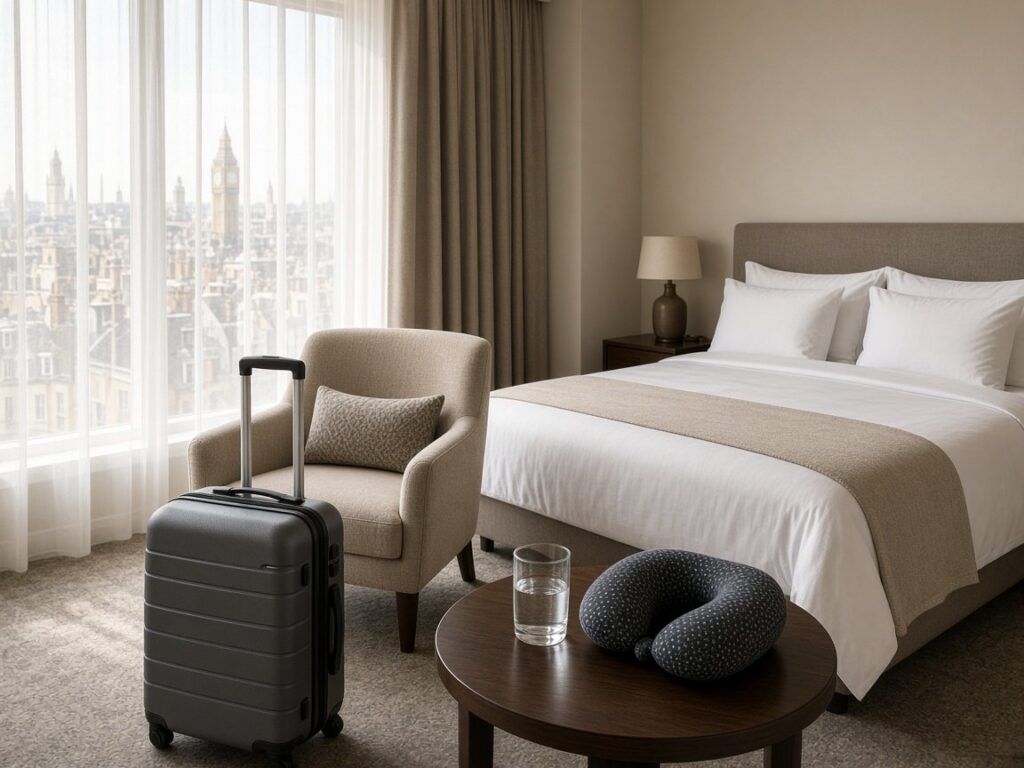
Massage After a Long Flight in London: Plan a Comfortable First Day
You have reached London, collected your suitcase and found the exit. It is tempting to fill the next few hours with plans: a meeting, a museum, a restaurant and perhaps a massage to mark the start of your visit. Yet after a long flight, the simplest question is often the most useful: do you actually feel ready for an appointment?
For someone thinking about a massage after a long flight, comfort matters more than a dramatic promise of recovery. Travel can leave you tired, thirsty, stiff from sitting or unsure what time your body thinks it is. A well-chosen massage may be an enjoyable leisure activity, but it does not cure jet lag, prevent blood clots or replace medical care. Your first decision should be whether you feel well, followed by what sort of session and schedule would suit your arrival day.
Why the first hours in London feel different from an ordinary afternoon
An arrival day is rarely one journey. After the flight come queues, luggage, rail connections and accommodation. By the time you unpack, the afternoon may feel longer than expected.
Sitting for hours, crossing time zones and encountering delays are different challenges. A therapist cannot fix them all.
The NHS guide to jet lag explains that changing time zones can disturb sleep patterns and that adjustment generally takes a few days. Natural daylight and moving towards the destination’s schedule are among its practical suggestions. A massage appointment should fit around those fundamentals, not promise to replace them.
Is it sensible to book a massage immediately after landing?
There is no universal rule saying everyone should book or avoid massage for a fixed number of hours after a flight. Suitability depends on how you feel, any medical risks and the treatment you are considering.
If you arrive feeling well, have time to eat, drink, move around and settle, a later appointment may be a pleasant addition to the day. If you feel dizzy, unwell, unusually breathless, in significant pain or simply exhausted, postponing it is the more sensible choice. Do not let a prepaid booking persuade you to ignore a concerning symptom.
Tell the practitioner you have recently completed a long journey. Ask about the intended pressure, positions and consultation. If you have a recent operation, significant medical condition, previous blood clot or other relevant risk, obtain appropriate medical advice about massage rather than relying on a spa description.
When a post-flight symptom needs medical help, not massage
This section is particularly important because prolonged travel is associated with a small but real risk of deep vein thrombosis (DVT). Most long-distance travellers do not develop a clot, but a massage is not a way to assess or treat one.
The NHS DVT guidance identifies warning signs such as unexplained pain or swelling in one leg, sometimes with warmth or changes in skin colour. If you suspect DVT, seek urgent advice through NHS 111 or an urgent GP appointment. Do not arrange a leg massage to see whether the swelling improves.
Sudden breathlessness, chest pain or coughing up blood can indicate a serious problem such as pulmonary embolism. Call 999 for emergency help rather than attending any wellness appointment. The CDC’s travel blood-clot guidance also explains relevant risk factors and symptoms.
If anything feels unusual or concerning after travel, a healthcare professional is the right person to assess it. A massage practitioner cannot rule out a blood clot.
Separate jet lag from ordinary travel discomfort
After a long-haul flight, you might feel alert at 3 am and sleepy in the middle of an important conversation. That is a timing problem, not necessarily a problem of tight muscles. The body’s sleep-wake rhythm takes time to adapt to a new time zone.
A quiet appointment may feel pleasant when you are tired, but claims that massage ‘resets the body clock’ or cures jet lag go beyond the evidence. Instead, use the ordinary measures recommended by the NHS: spend time outdoors during the day, follow the local sleep schedule where practical, and limit excessive alcohol and caffeine.
Plan the timing around your real arrival, not your ticket
A landing time does not account for passport control, bags, connections or checking in. Booking too close to arrival can turn a restful idea into another race.
Allow a realistic buffer without inventing a guaranteed airport-to-studio travel time. Check the latest journey information on Transport for London’s journey planner and ask the venue what happens if your flight is delayed. A flexible cancellation or rescheduling policy can be more valuable than selecting the earliest available appointment.
Getting from Heathrow or another London airport to a studio
London’s airports serve different parts of the city, and there is no single best route for every traveller. Heathrow offers rail and Underground options; other airports have their own train, coach and road connections. Journey times depend on terminal, interchange, luggage and disruption.
Transport for London explains the Elizabeth line’s Heathrow connections, including stops across central London. It is a useful starting point, but always check the actual service on the day. For anyone travelling with heavy luggage, the easiest route is not always the one that looks shortest on a map.
Velvete Tantric London’s contact information lists Collingham Place, London SW5. Confirm the exact entrance and appointment details directly rather than assuming every map listing or nearby transport stop leads to the correct door. There is little value in scheduling a calm treatment if the final part of the journey becomes unnecessarily confusing.
Choose an appointment length that respects the day
After flying, it may be difficult to judge how much activity will feel enjoyable. A long appointment can sound luxurious when you book from home but feel demanding once you have crossed several time zones, transported luggage and changed plans twice.
Ask what the advertised duration includes. Is the consultation counted? Do you need time to change or settle? What happens if you would prefer a gentler or shorter format? Providers differ, so do not assume every treatment has the same structure.
A shorter appointment may suit an arrival day better than a long one. Neither offers guaranteed faster recovery.
What to tell the therapist about your flight
A useful consultation does not require a complete account of your itinerary. Explain the details that may affect suitability and comfort: how recently you travelled, whether you have any current pain or unexplained swelling, and whether you have relevant medical conditions or medications. Tell the practitioner about injuries, recent surgery or a history of blood clots where relevant.
Then discuss ordinary preferences. Perhaps you want minimal conversation because you are tired. Perhaps you would rather avoid strong fragrance after hours in a confined cabin. Or you may prefer not to spend the appointment lying in a position that already feels uncomfortable.
Velvete’s article on discussing full-body massage preferences offers further questions about pressure and positioning. The important principle is to speak plainly and allow the practitioner to determine whether the requested treatment can be provided safely.
Travel stiffness is not a reason to demand deep pressure
When your shoulders feel awkward after carrying a backpack, it can be tempting to request the strongest possible massage. Yet strong pressure is not automatically better, especially when you are tired or uncertain about the source of discomfort.
The US National Center for Complementary and Integrative Health describes a range of massage techniques and notes that the evidence for specific health outcomes varies. It also reports rare serious adverse effects, sometimes associated with vigorous techniques or higher-risk clients.
Rather than ask a therapist to ‘fix everything the flight has done’, describe how you feel and what level of pressure you generally find comfortable. Avoid massage over painful, swollen or otherwise concerning areas until medically assessed. You can request an adjustment, a pause or an end to the session at any point.
What to do with luggage, clothing and an awkward schedule
First-day bookings raise small questions: will the studio accept luggage, and can the hotel store your bag before check-in? Ask rather than assume.
Ask the venue about bags before travelling. A massage room is not automatically a luggage-storage service, and large cases may make movement difficult. If your accommodation can store your suitcase, organising that first may simplify the afternoon.
Keep medication and travel documents secure. Comfortable clothes are more useful than elaborate preparation.
Two arrival-day plans that make sense for different travellers
Consider a visitor flying from Singapore to London for several days of meetings. Their flight arrives early, but they know they rarely sleep well onboard. Instead of booking immediately, they leave the afternoon flexible, organise luggage storage, eat a meal and check how they feel. If they are well and want a quiet leisure appointment, they can explore options after confirming details.
Now consider someone arriving from a European city for a weekend. They have barely changed time zones but have spent hours travelling between terminals and trains. Their priority may simply be an unhurried afternoon. They can choose a massage because they enjoy the experience, without pretending they need treatment for jet lag.
These examples are illustrative, not customer accounts.
Frequently asked questions
These answers focus on practical decisions after travelling. They do not replace advice for individual health concerns.
Can I have a massage on the same day as a long flight?
Some otherwise well travellers may choose to book one, but there is no universal answer for every person. Consider current symptoms, relevant health conditions, energy level and the treatment itself. If you have signs of a possible blood clot or another concerning condition, seek medical assessment rather than massage.
Does massage cure jet lag?
No. Jet lag involves a mismatch between your usual body clock and the new time zone. A massage may be enjoyable as part of a leisure itinerary, but it has not been established as a cure. NHS advice emphasises daylight and adjustment to the local sleep schedule.
Should I book a deep-tissue massage for stiff legs after flying?
Do not assume deeper pressure is better. In particular, new unexplained one-sided leg pain, swelling, warmth or colour changes require urgent medical advice because they may indicate DVT. Discuss ordinary comfort preferences with a qualified practitioner only when a massage is appropriate.
How soon after landing should I schedule the appointment?
There is no fixed interval that suits everybody. Allow for airport procedures, transport, accommodation and how you actually feel on arrival. Check booking flexibility rather than committing to an unrealistic gap between landing and treatment.
Can a London hotel arrange a massage for me?
Some hotels can recommend or organise wellness appointments, but arrangements vary. Check whether the service is at a studio, elsewhere in the hotel or in your room, and obtain the full details directly. Velvete’s current mobile or hotel-service availability must be confirmed rather than assumed.
What if I am taking medication or have a history of blood clots?
Ask your healthcare professional whether massage is suitable, particularly after prolonged travel. Share relevant information with the massage provider as appropriate. A practitioner should not substitute their own reassurance for medical assessment or advice.
Let your first day in London have room to breathe
Arriving in a new city can be exciting and tiring at once. There is no need to turn a massage into a cure for flying or a compulsory part of a luxury itinerary. If you feel well, have enough time and prefer the experience, a thoughtfully chosen appointment may fit into a pleasant first day. If you need to rest, rearrange plans or seek medical help, those needs come first.
For current appointment information, treatment formats and suitability questions, contact Velvete Tantric London before booking. An accurate answer about the service is far more useful than a promise of instant post-flight recovery.