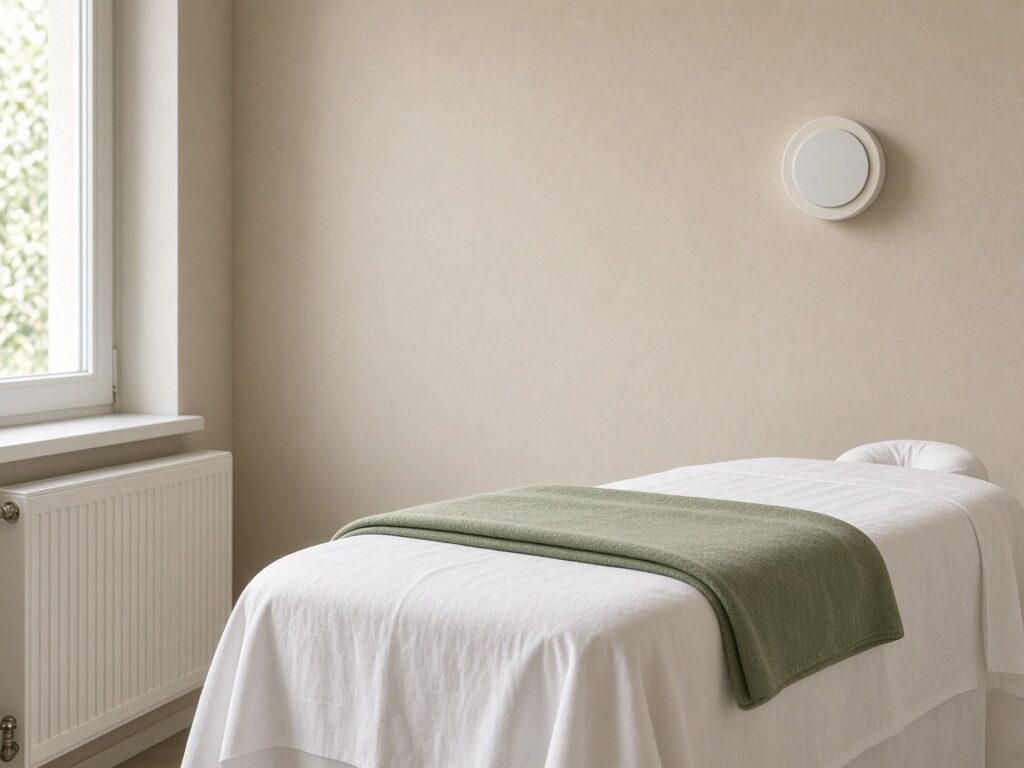
Massage Room Temperature and Comfort: What London Clients Should Know
On a damp London afternoon, a warm treatment room might sound like the perfect refuge. Yet the moment you settle onto a massage table, you may notice a draught across your shoulder. In July, the reverse can happen: a room that feels pleasant when you enter becomes uncomfortably warm once you are resting beneath a covering.
Massage room temperature matters because comfort changes throughout an appointment. The air, the treatment surface, the warmth of any oil, and the amount of covering all contribute to how you feel. There is no single temperature that will suit every client, and a beautiful room is not necessarily one with good thermal comfort.
Is there an ideal temperature for a massage room?
Not one that can responsibly be prescribed for everybody. You may encounter articles that give an exact figure and call it the correct temperature for relaxation. Such advice overlooks the difference between a fully dressed person walking into reception and someone resting relatively still during bodywork.
The UK’s Health and Safety Executive explains thermal comfort through six interacting factors: air temperature, radiant warmth, air movement, humidity, clothing insulation and physical activity. Personal preference also matters. These principles help explain why two people can enter the same room and report different experiences.
HSE guidance about minimum workplace temperatures relates to working conditions for employees. It is not a universal set point for a massage client or a recommendation to warm treatment rooms to a fixed degree. For clients, practical comfort, appropriate ventilation and safety deserve more attention than a number borrowed from unrelated settings.
Comfort changes from reception to treatment table
A massage visit includes several moments, and the same room can feel different at each one. Consider the ordinary sequence of arriving from outside, removing a coat, discussing the appointment, changing where appropriate and settling into a supported position.
At the entrance, your body may still be responding to cold wind or a crowded Underground carriage. You are moving, carrying things and wearing outdoor clothing. Once you are lying quietly, your activity is lower, and areas not covered by linen may feel cooler than before. Later, a thick blanket might be more warmth than you want.
The four sources of warmth people often confuse
A studio might describe a treatment as warm and comforting without explaining exactly where that warmth comes from. Four different elements may be involved.
Room air
Heating, air conditioning and ventilation affect the general environment. Air can feel uneven across a room, especially near windows or a vent. A high thermostat setting does not guarantee that the table is free from cold air movement.
The treatment surface
The table, mat, pillow and other supports have their own initial temperatures. A cool surface may be noticeable even in a comfortably heated room. Some providers use appropriate table warmers, but these should not be assumed to be available. Any warming equipment must be suitable, safely used and controllable.
Towels and coverings
Draping provides privacy and can help retain warmth. Extra coverage may be useful during parts of a session when the therapist is working elsewhere. The right amount is personal: one client welcomes another layer, while another would rather have a lighter sheet. Ask what the studio normally provides.
Oil or other products
A product applied directly to the skin may feel cool or warm, independently of the air. An oil warmer is not a substitute for a properly adjusted room, and any heated product should be tested and applied only at a comfortable temperature. If that topic is relevant to your appointment, Velvete’s hot oil massage preparation guide covers product-related questions in more detail.
A draught can matter more than the thermostat
Imagine a treatment table positioned directly below an air-conditioning outlet. The display may show a moderate temperature, but a stream of moving air can feel cool across one side of the body. Alternatively, a heavy curtain and radiator may create a warm corner while the rest of the space remains cooler.
HSE’s ventilation guidance specifically addresses the need to limit uncomfortable draughts while maintaining adequate fresh air. Turning off every source of ventilation is not necessarily a sensible solution. A provider may instead be able to alter the airflow direction, move the table or use an appropriate covering.
What about humidity and seasonal weather?
London weather is variable, but the effect on a massage room is not always straightforward. In winter, coats and wet umbrellas collect near entrances while indoor heating can leave certain rooms feeling dry. During a summer warm spell, direct sunlight may raise the temperature near windows even if outside air feels comparatively mild.
Humidity changes how people perceive warmth, while the position of windows and radiators influences where heat accumulates. None of this means clients must become building engineers. It simply explains why room comfort should be judged by the actual environment, rather than promises that the studio stays at a fixed temperature all year.
How to request a cooler treatment room
Some visitors assume that massage is meant to feel intensely warm, so they endure discomfort rather than say anything. There is no requirement to tolerate a hot room just because a service is marketed as indulgent.
You could say, ‘I prefer a slightly cooler room and light covering. Is there a way to adjust the heating or bedding if I become too warm?’ That gives the studio a specific request to consider.
If you feel overheated during the appointment, tell the practitioner promptly. Adjusting a blanket, reducing an appropriate heat source or pausing may help, depending on the situation. Do not try to push through dizziness, nausea or other concerning symptoms for the sake of completing a booked session.
How to ask for warmth without feeling awkward
The opposite request is equally straightforward. A client who feels cold on the table can ask whether an extra towel, different covering or adjustment to the heating is possible. If the practitioner is working on one area, remaining areas should still be covered appropriately according to the agreed treatment and draping arrangements.
You might prefer the therapist to warm their hands before contact, but do not assume a studio uses heated oils or specialist warming equipment. Temperature preferences can be discussed without requesting a different treatment entirely.
Couples and shared spaces add another complication
Two people booking together may have very different temperature preferences. One enjoys a warm room while the other is uncomfortable beneath a heavy blanket. When treatments take place in the same space, changing the heating for one person may affect the other.
A practical solution is to agree on individual coverings or other safe adjustments where the provider can offer them. A shared booking should not automatically mean identical bedding, positioning or product temperatures. If the difference is substantial, the studio should explain what is feasible before the session.
This is one reason to confirm the format of a couples appointment rather than assuming both visitors will experience the same surroundings. The room, staffing and equipment vary by provider, as do the options for individual comfort.
When heat or cold sensitivity needs extra care
Someone who is pregnant, has a condition that affects temperature sensation, or uses medication that affects heat tolerance may need additional guidance about heated products or environmental conditions. A massage practitioner should not diagnose these issues or improvise medical advice.
Tell the studio about any practical limitation relevant to the session, and seek advice from an appropriate healthcare professional if you are unsure whether an exposure is suitable. In particular, reduced ability to feel heat can make warming products risky. Never accept a product that feels painful, and do not rely on a therapist’s reassurance alone if you have a known medical restriction.
There is also a difference between ordinary discomfort and signs of illness. The NHS guidance on heat exhaustion and heatstroke lists symptoms such as dizziness, headache, nausea and excessive sweating. Severe symptoms, including confusion or collapse, need urgent medical attention. A wellness appointment is not a treatment for heat-related illness.
What does professional guidance expect of a therapist?
The UK’s National Occupational Standards for body massage include checking client wellbeing, maintaining privacy and ensuring suitable environmental conditions. The standard also addresses responding to discomfort during treatment. Those are relevant professional principles even though individual studios may differ in layout and equipment.
Three London situations that illustrate the choice
A winter visitor near Earl’s Court. After walking through drizzle in a heavy coat, a guest expects the room to feel warm. Once resting under a thick covering, however, they find it too hot. The useful adjustment might be to change the covering rather than lower the heating for the whole premises.
An office worker arriving from a packed train. A visitor feels warm after the commute and asks for no heated products. The therapist explains which products are ordinarily used and whether a room adjustment is available. The visitor can choose based on the answer rather than a photograph of the studio.
Two friends sharing a wellness booking. One dislikes cool air, the other dislikes heavy bedding. If the space and treatment arrangement permit separate coverings, that may address the difference more easily than altering the thermostat repeatedly.
These are hypothetical scenarios, not reports of Velvete clients or promises about the studio’s equipment.
A useful temperature enquiry before booking
If temperature affects whether you will enjoy an appointment, one message can prevent uncertainty:
I’m considering a massage and tend to feel too warm under heavy coverings. Could you tell me whether the treatment-room temperature or bedding can be adjusted during the session? I would also prefer not to use additional heated products. Please let me know what arrangements are currently possible.
Someone who feels cold can make the equivalent request for adequate covering and reduced draughts. You need not share unrelated medical history to ask about heating. If a specific health concern changes the safety of treatment, share only the relevant information needed for the practitioner to assess suitability and discuss alternatives.
Before paying, confirm the appointment type, treatment duration and any practical restrictions. If warmth matters to you, mention it through Velvete’s contact page so the team can explain the room, bedding and comfort options for your appointment.
Frequently asked questions
What temperature should a massage room be in Celsius?
There is no single Celsius figure that is ideal for every massage client. Comfort depends on air movement, humidity, clothing or draping, individual preferences and the activities involved. Ask the studio how it manages room comfort rather than treating a claimed exact temperature as a quality guarantee.
Can I ask for the heating to be turned down?
Yes, you can ask. The provider may have individual room controls, a shared heating system or other limitations. A suitable solution could involve changing coverings or airflow instead. Confirm what can be adjusted before booking if it is essential to your comfort.
Should massage oil always be heated?
No. Whether oil is warmed depends on the treatment and product. Oil that is used warm should never feel painfully hot. A client can ask about the product temperature and whether an alternative is appropriate.
Does a warm room make a massage more effective?
Warmth may be pleasant for some people, but a hotter room is not automatically a more effective or medically beneficial massage. Treatment quality also involves communication, technique, consent and comfort. Claims that room heat cures problems or removes toxins should be treated cautiously.
Can I request an extra blanket during a treatment?
You can request one, and the therapist can explain what suitable coverings are available. Draping and support should maintain privacy and align with the treatment. Extra layers should not be used in a way that causes overheating.
What should I do if I feel faint or nauseous?
Tell the therapist to stop and seek an appropriate response immediately. Do not treat possible heat illness as a routine part of massage. NHS guidance advises cooling measures for heat exhaustion and urgent help for serious symptoms, including signs of heatstroke.
Can I ask Velvete Tantric London about room temperature?
Yes. Mention it when you enquire, and the team can explain the current treatment-room conditions, bedding and comfort options before you book. This is especially helpful if temperature is an essential consideration for you.
Comfort is something you can discuss, not simply endure
A thoughtfully prepared massage room is not defined by how hot it feels when you open the door. Comfort is affected by changing positions, air movement, covering, product temperature and your own preferences. That means adjustments should be part of an ordinary, respectful conversation rather than a special favour.
If you are planning a London appointment, contact Velvete Tantric London to discuss the room conditions and available comfort arrangements before booking.