Studio or Mobile Massage in London? How to Choose the Right Setting
A massage appointment can fit neatly into your diary and still feel inconvenient. Perhaps you enjoy stepping into a dedicated wellness space, but the journey home involves two busy trains. Or perhaps you like the idea of staying in your hotel, yet wonder how much work it takes to turn an ordinary room into a suitable treatment space.
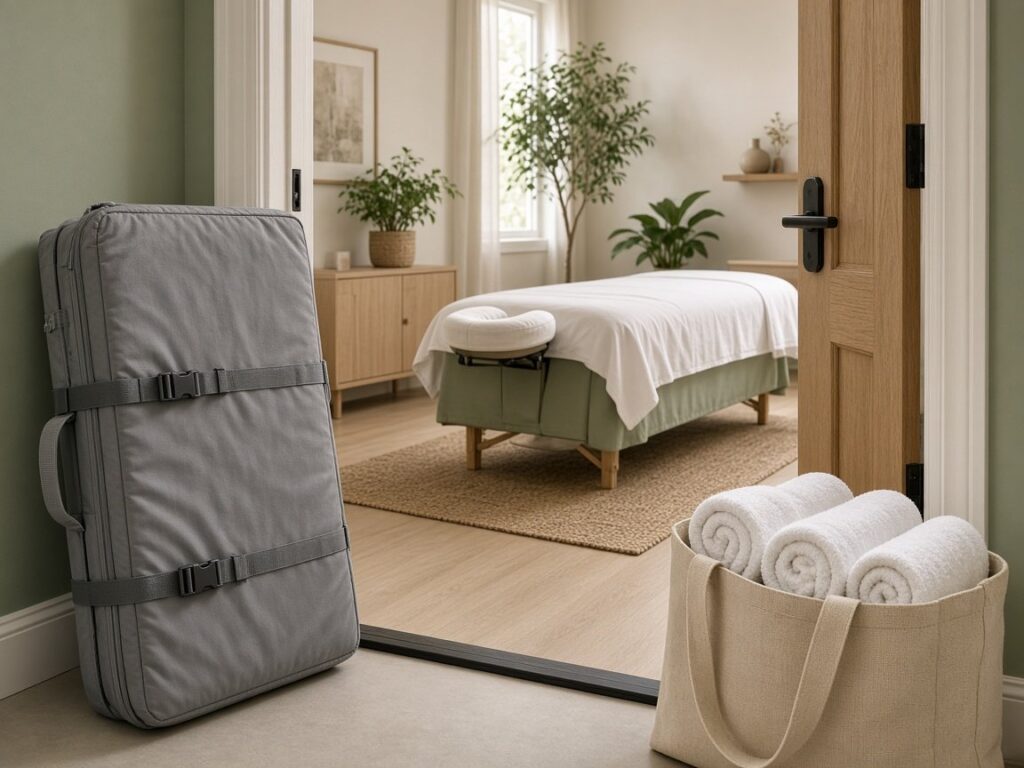
Choosing between studio or mobile massage in London is largely a decision about setting, privacy, preparation and logistics. A studio provides a room arranged for treatments. A mobile appointment brings a practitioner to a permitted home, hotel or other suitable location, assuming the service is offered there. Neither format is inherently more effective. The better choice is the one that meets your practical needs and can be delivered professionally.
Start with the experience you want after the appointment
Consider the final twenty minutes of your day, not only the time spent receiving massage. Some people enjoy leaving their usual surroundings behind, changing pace and taking a quiet walk after a studio visit. Others prefer to remain at home, where they can put on comfortable clothes and avoid travelling again.
A studio requires travel; a mobile appointment requires a suitable room. Consider which arrangement feels simpler.
What makes a studio appointment different?
A massage studio is designed, or at least arranged, for appointments. It may have a dedicated treatment table, controllable lighting, appropriate linen, space for the therapist to work, and a reception or arrival procedure. Clients can usually leave the organisation of that room to the provider.
Not every studio has showers, changing facilities or step-free access. Confirm essential facilities before booking, particularly if you prefer to keep appointments separate from your home.
For some clients, leaving home and entering a dedicated space is part of the appeal.
What does mobile massage actually include?
A mobile massage is a practitioner-led appointment arranged outside the therapist’s usual premises. It may take place in a client’s home or, where allowed, a hotel room. The practitioner might bring a portable table, fresh linen and massage products. Some services use the client’s existing furniture, but you should never assume that is appropriate or included.
Mobile availability depends on postcode, staffing, treatment type and property access. A business offering studio massage does not necessarily offer home visits.
Confirm equipment, client responsibilities, setup time and what happens if the space is unsuitable.
Studio versus mobile massage at a glance
These practical differences depend on the provider’s policy.
| Booking factor | Studio massage | Mobile massage |
|---|---|---|
| Where it happens | At the provider’s treatment premises | At an agreed suitable address |
| Travel responsibility | Mainly the client | Mainly the practitioner |
| Preparing the room | Usually handled by the venue | Often requires client cooperation |
| Equipment | Typically remains in the treatment room | May need to be transported and assembled |
| Privacy considerations | Venue layout, arrival process and other visitors | Household, hotel staff and room access |
| Timing | Travel and arrival need planning | Therapist travel and setup need planning |
| What to verify | Facilities, exact entrance and session details | Service area, equipment, access and any travel charge |
Neither format is inherently superior.
Home massage needs a workable room, not a perfect home
A tidy, accessible floor area matters more than elaborate decoration. A portable massage table needs sufficient clearance around it for the practitioner to move safely. There should be room to enter and leave without stepping over bags, moving fragile furniture or negotiating trailing cables.
You may also need a comfortable temperature, reliable lighting, an appropriate surface for supplies and access to handwashing facilities. Discuss these requirements with the provider beforehand. Avoid making assumptions about a minimum floor area because different tables, practitioners and treatment techniques require different arrangements.
Do not assume the therapist can move furniture. In a compact flat, describe the space before booking.
Hotel appointments add another decision-maker
Hotel visitor or commercial-service policies may restrict outside therapists or require advance registration. Confirm permission with the hotel first.
Follow reception and registration rules, and confirm that the room accommodates the treatment equipment.
A conference visitor near Gloucester Road may prefer a hotel appointment, but only if hotel permission, travel coverage and room suitability are confirmed.
What should you expect to pay for?
Studio and mobile prices cannot be compared from a headline session fee alone. A mobile quote may include travel, parking, minimum booking duration, equipment transport or an additional charge for particular hours. A studio appointment may avoid travel charges but still require you to pay for transport to the venue.
Ask for the total price before payment. Confirm whether setup is part of the booked time, whether delays affect the appointment, and what happens if the hotel refuses entry or the home lacks sufficient space. Cancellation and rescheduling terms should be clear for both formats.
Consider a delayed Underground journey or a practitioner held up by London traffic. Who contacts whom, how much notice is required, and does the session finish at the original time? A studio may have a fixed timetable; a mobile visit may be affected by the previous appointment or parking. These practical details are more useful than assuming either option offers unlimited flexibility.
Consider the total cost alongside your own time and travel.
How do privacy and discretion compare?
A studio gives you a place away from your home, but its entrance, reception, waiting space and shared corridors are relevant to privacy. You may want to know whether other visitors can see arrival details or hear consultations. Ask how appointments are scheduled and what contact information the provider needs.
A mobile visit removes the journey to a studio but introduces different questions. Will flatmates or family members be at home? Can you offer a room that is private for the agreed appointment? Is access to a hotel room permitted? Will the practitioner need to contact a concierge or building manager?
Ask how booking information is stored and whether messages arrive by email, text or telephone.
Hygiene follows the practitioner, not the postcode
Professional hygiene standards matter equally in a purpose-built room and a client’s living room. The UK National Occupational Standards for body massage cover clean equipment and materials, suitable environmental conditions, personal hygiene, consultation and client comfort. These responsibilities do not disappear because the appointment is mobile.
For a home visit, ask how linen is transported, how reusable equipment is cleaned and what supplies the practitioner brings. A studio should also be able to explain its cleaning and linen arrangements. A spotless-looking photograph is not evidence of the actual procedure used between appointments.
Expect straightforward answers about cleaning and equipment preparation.
Consent and professional boundaries work the same way
Being in your own home does not change the basic rules of a professional massage appointment. The treatment should be explained, boundaries agreed and consent checked. You can request changes, decline an element or stop the session. A provider should also be able to decline a location or activity that is unsafe or outside the agreed service.
At home, agree the room, arrival time, duration and who will be present.
The provider’s qualifications, insurance and scope of practice matter in either setting. Ask whether the practitioner is insured for the specific location and treatment being offered rather than assuming that cover for a studio extends to every home or hotel arrangement.
What about the benefits of the massage itself?
Neither location guarantees better results. Both may offer an enjoyable break, depending on the person and provider.
The UK’s Advertising Standards Authority guidance on massage and bodywork distinguishes general relaxation and wellbeing language from stronger medical claims that need appropriate evidence. Massage should not be marketed as a cure for medical or psychological conditions simply because it takes place in a premium room or a client’s home.
If you are booking because of an injury, recent procedure or ongoing medical concern, seek relevant healthcare advice and discuss suitability with the practitioner before arranging a session.
Three London situations where the choice changes
A Canary Wharf professional may prefer a studio near their commute rather than preparing a flat.
In a busy shared household, a studio might offer fewer interruptions than a home visit.
An Earl’s Court hotel guest may prefer mobile service if the hotel permits it and the provider covers the area.
These are hypothetical examples, not Velvete client accounts.
Check the actual London service before making plans
Velvete Tantric London’s contact page currently identifies its London SW5 location and offers an enquiry form. That confirms a way to ask about studio appointments. It does not, by itself, establish that a particular mobile treatment, outcall therapist or hotel visit can be booked today.
If you prefer a personalised experience, Velvete also discusses individual preferences in its customised tantric massage guide. Personalisation concerns how an appointment is agreed and delivered; it should not be confused with confirmed availability at every location.
When contacting a provider, specify the treatment you want and whether you prefer the venue or a visit to your address. The team can then explain current options rather than relying on assumptions made from a general blog post.
A useful booking message for either format
Ask only for the information needed to compare the formats.
For example: I am considering a professional relaxation massage in London and would like to compare an appointment at your studio with a possible home or hotel visit. Could you confirm which formats are currently available, what equipment is provided, any travel or setup charges, and the cancellation policy? I would also like to know the total duration and what space a mobile appointment would require.
Share a general postcode initially, and confirm arrangements in writing before providing a private address.
Frequently asked questions
Providers set their own equipment, travel and booking rules.
Is mobile massage the same as outcall massage?
The terms often overlap. Both commonly describe a practitioner travelling to an agreed client location. Confirm permitted addresses and what is included.
Can I book a massage in a London hotel room?
Possibly, but the hotel must permit the appointment and the provider must agree to attend. Visitor registration, room suitability and equipment requirements may apply. Never assume that paying for a hotel room automatically authorises an outside commercial treatment.
Is a studio massage more hygienic than a home visit?
Not necessarily. Hygiene depends on the provider’s procedures, clean materials, equipment care and the suitability of the space. Ask how standards are maintained in the exact setting you are considering.
Does a mobile therapist bring a massage table?
Some do, while others use different arrangements. Ask what equipment is included, whether the table needs clearance and if your home or hotel room has enough space. Do not assume a bed or sofa is suitable for professional massage.
Which option gives me more privacy?
It depends on the studio layout and your home or hotel arrangements. A dedicated treatment room may be more private than a busy shared flat. A home visit may reduce public travel but involve building access or household considerations. Compare the actual circumstances.
Is mobile massage always more expensive?
No. Prices depend on the provider, duration, location and any travel or minimum-booking charges. Request the full quote, including setup time and cancellation terms, before comparing it with a studio appointment.
Decide where you can actually switch off
A studio offers a dedicated setting; mobile massage reduces travel but needs a suitable room. Both require professional standards, consent and clear pricing.
The simplest test is whether the logistics make the appointment easier or more complicated for you. Choose the arrangement you understand and can comfortably accommodate. To confirm the options currently offered, contact Velvete Tantric London with your preferred format and location before booking.